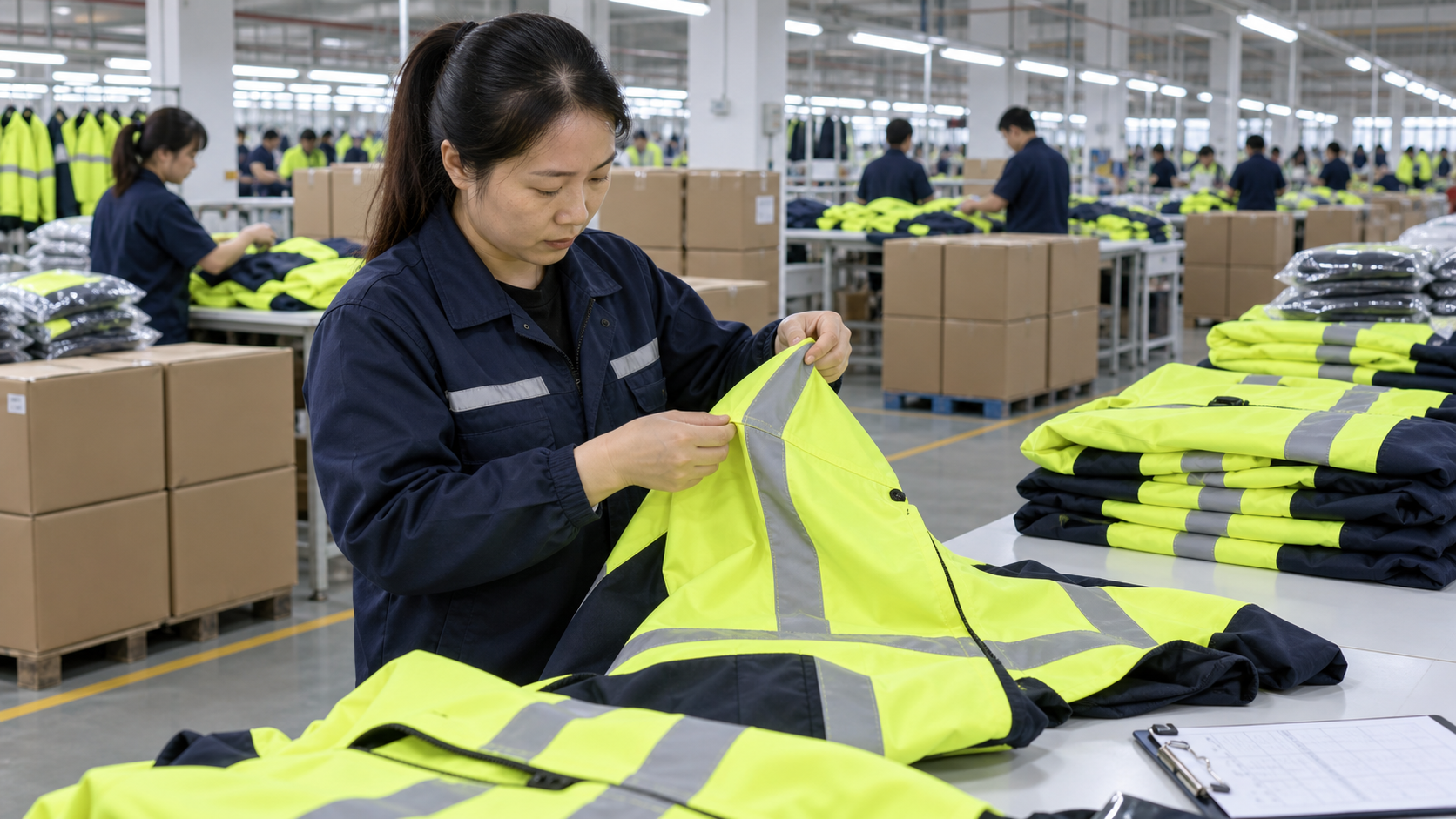
A custom uniform order starts with a practical question: what does the team need the garment to do, every day? A reliable answer brings together work conditions, movement, visibility, wash frequency and brand presentation before a sample is approved.
1. Understand the working environment
Start with the job rather than the garment. A warehouse picker, a roadside maintenance crew and an outdoor service team may all need a jacket, but their priorities are different. Note the temperature range, rain exposure, indoor or outdoor use, visibility requirements and the tools or equipment workers carry.
- Map practical risks such as low light, abrasion, heat, rain or chemical contact.
- Include the people who wear the garments when checking mobility and pocket placement.
- Confirm whether the uniform will be washed commercially or at home.
2. Choose fabric for the job, not the catalogue
Fabric selection is a balance of weight, durability, comfort and care. For a physical role, request a fabric specification that states the fibre content, fabric weight, construction and intended finish. For example, a lighter poly-cotton can work well for indoor movement, while a more structured outer layer may suit wet or exposed conditions.
Useful sample check: compare fabric hand feel, seam strength, reflective trim placement and colour consistency under normal working light before confirming bulk production.
Where performance claims or local regulations apply, ask the supplier which documentation relates to the proposed material. A garment should not be described as compliant until the relevant specification and evidence have been reviewed for your market and application.
3. Specify the details that matter in daily use
Customisation is more than a logo. The strongest briefs define where a logo appears, the preferred colour references, pocket function, closure style, size range and labelling requirements. Small decisions at this stage help avoid unnecessary revisions later.
Planning a workwear project?
Send your role, quantity and target use.
4. Review the production process before you place the order
A clear production route gives purchasing teams a better basis for planning. Ask how the approved sample is recorded, how fabric and trims are checked, and when the final inspection takes place. For export orders, packing requirements should be confirmed early enough to be checked before shipment.
At GarbPact, the practical flow is material preparation, garment construction, in-line review, final inspection and packing. The details depend on the order, so the sample and approved specification remain the reference point for the production team.
5. Build a clearer brief for faster sampling
A complete initial brief lets a supplier respond with more relevant questions and a more accurate quotation. It does not need to be lengthy; it needs to make the working context clear.
- Garment type and end-use environment
- Estimated quantity, size range and delivery market
- Colour references, logo artwork and branding method
- Requested fabric or performance requirements
- Target timing, packaging and inspection expectations
Frequently asked questions
What should I send for an initial workwear quote?
Send the garment type, quantity, intended use, delivery country, desired colours and logo artwork if available. A reference photo or existing sample also helps clarify the intended construction.
Can we approve a sample before bulk production?
Yes. A sample is the practical reference for materials, fit, colours, branding position and garment details before the bulk order is released.
What is checked before shipment?
Checks can cover workmanship, measurements, appearance, packing and the order-specific requirements agreed before production. Confirm the inspection scope in the purchase brief.