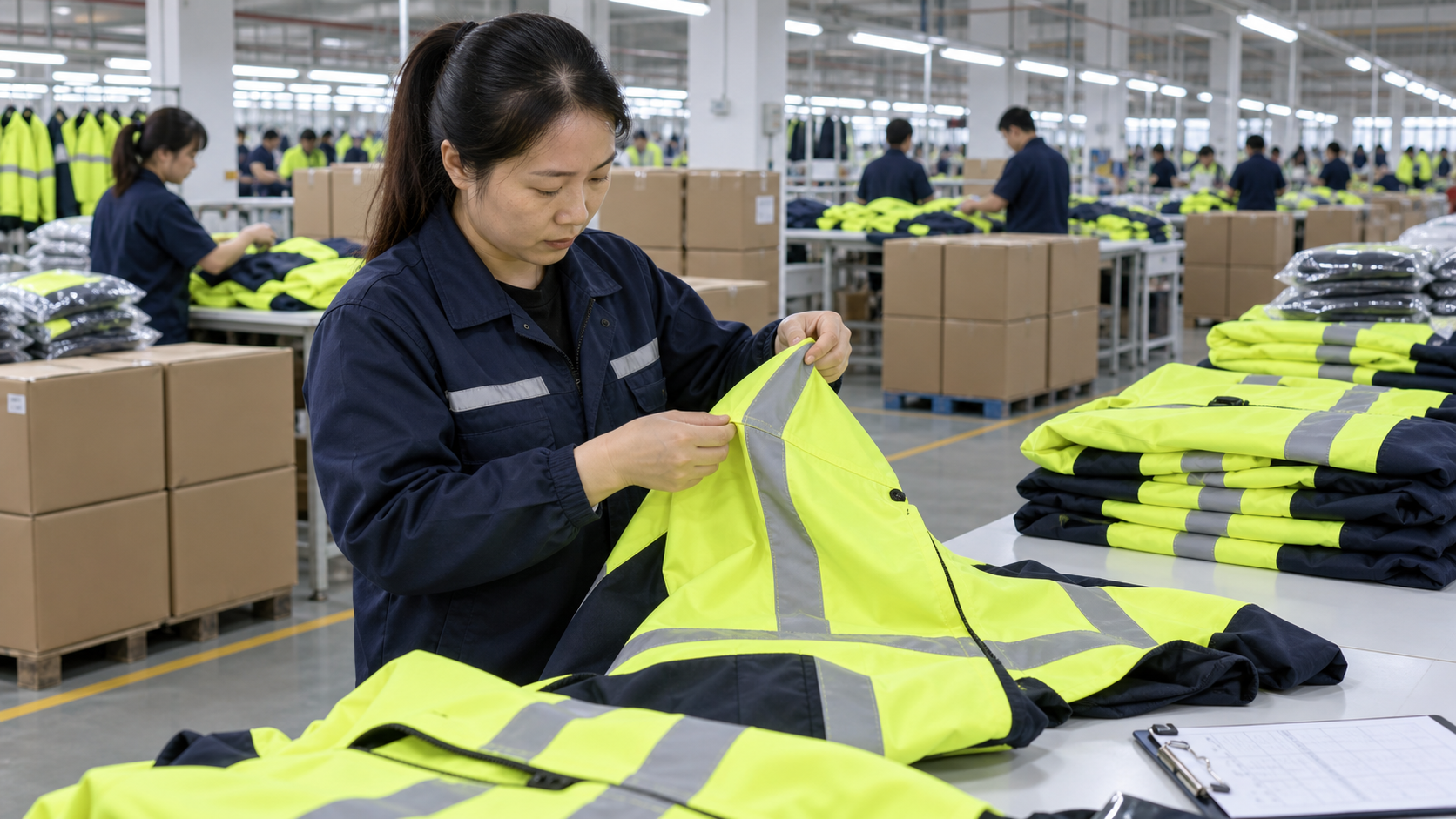
MOQ, sample timing and lead time are connected decisions, not three separate numbers. This guide explains how B2B buyers can prepare a custom workwear order so that quantities, colour choices, approvals and shipment expectations are clear before bulk production begins.
1. What MOQ really means in custom workwear
MOQ is the minimum quantity a factory can produce efficiently for a particular combination of garment, fabric, colour, trims and decoration. It is not a universal number that applies to every product in a catalogue. A stock polo with a simple embroidery request may be planned differently from a newly developed high-visibility jacket with custom fabric, multiple contrast panels and reflective tape.
Buyers should ask what the MOQ applies to: per style, per colour, per fabric allocation or per order. This avoids a common mismatch where a total quantity appears sufficient, but is spread across too many colours or constructions for material ordering and production planning. A clear quotation should identify the unit of the MOQ and any cost effect of splitting colourways or sizes.
MOQ is also a risk-management tool. It helps a factory purchase fabric and components, set a cutting plan and run a sewing line with a reasonable balance of material use and labour. If the requested quantity is below the efficient level, the practical alternatives may include using available materials, reducing colour options, simplifying the construction or accepting a different unit cost.
- Ask whether MOQ is per style, per colour and per fabric allocation.
- Separate stock-based customisation from fully developed cut-and-sew workwear.
- Confirm the cost and feasibility impact of small colour or size splits.
2. Prepare the brief before asking for a lead time
A lead time estimate becomes more meaningful when the factory has the inputs needed to plan it. At minimum, send the garment type, target quantity, destination, size range, colour reference, artwork, branding method, target use and requested delivery window. If you have an existing garment, photographs and measurements can help clarify construction. If you have a technical pack, include it with the first enquiry.
State which points are fixed and which are open to recommendation. For example, a buyer may require a navy and orange colour direction but be open to the fabric composition. Another may have a fixed logo size but need advice on embroidery versus print. That distinction lets the supplier identify the decisions that affect material availability, sampling steps and production flow.
It is helpful to name the people who approve artwork, sample fit, purchase order details and shipment inspection. Delays often occur because a sample arrives before the internal approver is available or because logo changes are discussed after material preparation has begun. An approval path is as important as a factory calendar.
3. Use the sample stage to reduce production risk
A sample is where customer requirements become a physical garment. Depending on the project, the sample can validate fit, fabric hand feel, colours, logo placement, pocket layout, reflective tape, labels and packaging direction. It should be reviewed against an agreed checklist rather than only photographed for approval.
For a new programme, distinguish between a development sample and a pre-production sample. The first may explore construction or material choices. The later approved sample should reflect the final specification that bulk production will follow. If an element changes after approval, record the revision explicitly and decide whether another confirmation is needed before cutting.
Keep the sample record practical. Include photographs, measurements, fabric or trim references, artwork files, approved comments and the date. This record helps when the production team performs in-line review, and it gives the buyer a useful basis for shipment inspection. It also makes repeat orders more predictable because the factory is not rebuilding the brief from scattered messages.
Need a clearer specification?
Turn your requirements into a practical workwear brief.
4. Build a realistic timeline from decision gates
A custom workwear timeline usually includes enquiry clarification, material confirmation, sample development, sample review, bulk material preparation, cutting, sewing, in-line checks, final inspection, packing and dispatch. The duration of each step depends on the product complexity, material availability, requested quantity and the speed of approvals. A responsible supplier should not present one generic lead time as if it applies to every order.
The buyer can improve predictability by identifying the non-negotiable date and working backwards. Allow time for artwork approval, sample transit, internal fitting, purchase-order confirmation and any third-party inspection or shipping booking. If the final delivery date is fixed by a project mobilisation, installation preparation or seasonal issue, state it in the initial brief so the factory can assess feasibility honestly.
Do not treat a shipping date and an arrival date as the same promise. Production completion, export packing, handover to the forwarder and destination transit are separate milestones. Agree which milestone the quotation covers and who is responsible for booking, documents and destination clearance.
5. Plan quality checks and packing before shipment
Quality control works best when the order standard is visible. The approved sample, size chart, artwork approval, colour reference, packing instructions and inspection criteria should be available to the people checking the order. A shipment inspection can then compare goods to an agreed reference rather than to an unrecorded expectation.
Ask the supplier how finished garments are checked for workmanship, appearance, measurements and packing. The scope should match the order. For example, a branded corporate polo programme may focus on colour, embroidery position, size assortment and presentation. A multi-component work jacket may require more detailed attention to construction, tape placement, closures and label information.
Packing is not an afterthought. Confirm whether garments are individually bagged, how size assortments are packed, what carton marks are required and whether cartons need to be sequenced by site or wearer group. Clear packing data supports receiving teams and can reduce avoidable sorting work after delivery.
6. Questions that make an enquiry easier to quote
A productive first enquiry is specific enough to reveal the work but flexible enough to let a manufacturer propose a practical route. Ask for the MOQ basis, sample approach, material options, likely approval checkpoints, production milestone, inspection plan and packing assumptions. Compare the clarity of the answer, not only the lowest unit price.
When evaluating alternatives, separate confirmed facts from estimates. A fabric that is not yet reserved, an unapproved logo method or an incomplete size ratio can change a quote and a schedule. A good supplier will explain these dependencies instead of hiding them in broad wording.
GarbPact produces custom workwear from sample to shipment in Shenzhen. We use the buyer’s approved brief and sample as the working reference for material preparation, production and final inspection. Share the requirements early, and we can identify the choices that affect MOQ and production timing before an order is released.
Frequently asked questions
What is a typical MOQ for custom workwear?
It varies by garment complexity, fabric, colourway, decoration and whether the order uses stock materials or a new cut-and-sew development. Ask for the MOQ basis for your exact brief.
How long does a custom workwear sample take?
Timing depends on the completeness of the brief, material availability, logo method and sample revisions. Confirm the sample plan and approval deadline with the supplier rather than relying on a generic number.
What causes workwear lead times to change?
Late artwork approval, fabric changes, colour splits, incomplete sizing, revised packing instructions and delayed sample feedback are common causes. A consolidated approved specification reduces these risks.
Conclusion
The most reliable way to plan a custom workwear order is to treat MOQ, samples and lead time as one connected process. Give the factory a clear brief, use the sample to make decisions, record approvals and plan inspection and packing before bulk production. That gives both buyer and supplier a stronger basis for delivery.
Send your garment list, quantities, colours, logo files and target delivery date. Ask GarbPact for a practical sample and production plan for your requirements.