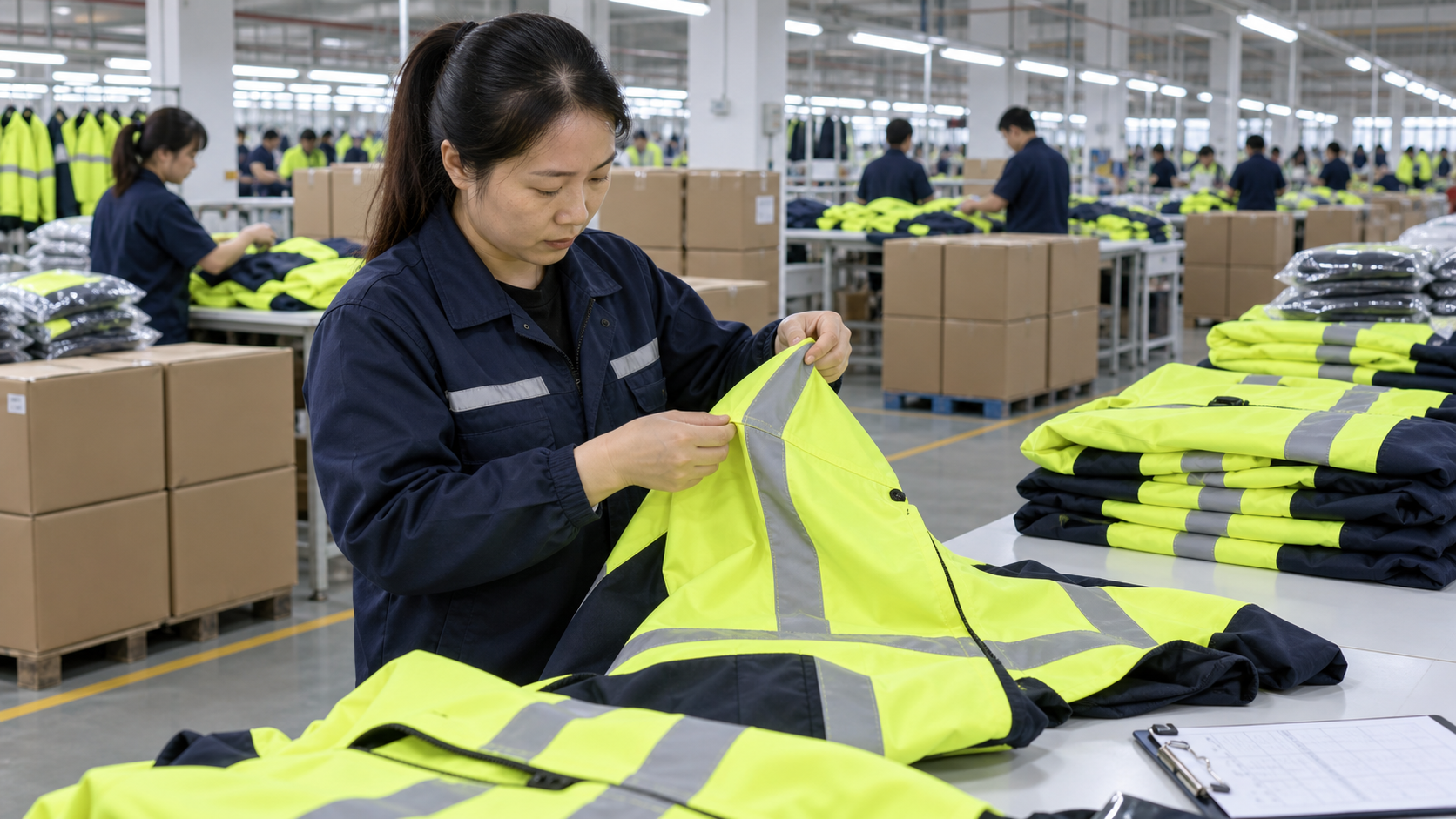
1. Start with the operational question
For buyers requesting comparable quotations from manufacturers, the first useful conversation is not about a catalogue feature. It is about the work, the wearer, the care route and the delivery market. Record garment type, role, quantity, colour, size range, artwork, use case, delivery market and target timing before asking a factory for a price or a sample. Those details determine which choices are fixed and which can be proposed.
In production reviews, unclear requirements usually appear later as a fit issue, a colour discussion, a trim substitution or an avoidable approval delay. A short written brief gives the buyer, sample room and production team one reference point. It is more reliable than trying to reconstruct an agreement from photographs and message threads.
- What makes a good workwear RFQ?
- A good RFQ gives each supplier the same usable scope and identifies which choices are fixed versus open to recommendation.
2. Turn the requirement into a quoteable specification
A quoteable brief identifies the garment, the quantity basis, the intended use, the visual direction and the acceptance criteria. For this topic, buyers should make a complete first enquiry that lets a supplier identify meaningful assumptions explicit. A manufacturer can then separate a confirmed requirement from an estimate or a recommendation.
Use clear nouns rather than broad claims. For example, name the fabric composition or desired performance discussion, the branding position, size range, packing sequence and delivery milestone. If a standard, tender clause or customer policy applies, attach it before sampling instead of expecting the factory to infer it from a product image.
GarbPact treats the approved specification and sample as the practical reference during material preparation, sewing, in-line review and shipment inspection. That does not replace the buyer's own safety, legal or project responsibility; it makes the commercial production discussion easier to trace.
Factory testing note: retain the approved fabric swatch, artwork file, size chart and construction comments with the signed sample so the bulk order can be checked against one agreed record.
3. Use the sample to test the real decision
A sample should answer a defined set of questions, not simply approve the appearance. For comparing prices based on different and incomplete scopes, ask wearers to perform the movement, carry the equipment and follow the care routine that matters in daily work. Record what they observe about comfort, access, coverage, colour, construction and branding.
Photograph key views and note the material reference, measurement points, artwork size and placement. If feedback changes the design, consolidate the revised decision before bulk cutting. Repeated informal changes can make it impossible for an inspector to know which version is the accepted one.
Where a protective or performance claim is involved, confirm what evidence relates to the actual finished garment and destination market. A material document, a test report and a finished-garment claim are not automatically interchangeable.
Need a clearer specification?
Turn your requirements into a practical workwear brief.
4. Plan production controls before the order is released
The most useful controls are agreed early: incoming material checks, an in-line review point, measurement checks, final appearance review and packing confirmation. The inspection plan should reflect Garment list and quantities.,Application, colours and logo artwork.,Sizes, packing, destination and target date.. It should not promise a generic inspection without defining what will be compared.
During factory production, clear carton marks, size assortments and site allocations matter as much as garment workmanship for many B2B orders. If teams must receive uniforms by location, employee group or size, document the sorting rule before packing begins.
A shipment inspection is strongest when the buyer and factory already share the acceptance criteria. It can then compare the order with the approved sample, specification and packing list instead of trying to make a judgement after production is complete.
5. Questions to ask before choosing a supplier
Ask how the supplier will handle a complete first enquiry that lets a supplier identify meaningful assumptions, which inputs are still needed, what the sample is intended to validate, and which checkpoints occur before dispatch. A useful answer distinguishes facts from assumptions and flags decisions that can affect cost, timing or feasibility.
Compare the clarity of the production route, not only the headline unit price. A lower quote that leaves fabric availability, sample approval, artwork method or packing requirements undefined can create a more expensive decision later.
For international workwear programmes, also confirm the commercial delivery milestone, export packing requirements, document owner and the information needed by the importer. These are normal planning steps, not an indication that a shipment is already compliant for every destination.
6. Buyer checklist before requesting a quote
Before sending an enquiry, consolidate the documents and decisions that affect the order. This makes sample planning faster and gives each supplier the same basis for a meaningful quotation.
If some choices remain open, say so. A buyer can set a non-negotiable use case or colour direction while inviting practical recommendations on construction, material or decoration. That is more productive than leaving every parameter blank.
Once the brief is ready, send it with a target approval date and delivery date. The factory can then advise on the route from development sample to shipment inspection without making promises based on missing inputs.
Frequently asked questions
S
h
I
t
Conclusion
Custom Workwear RFQ Template: What Buyers Should Include is best handled as a documented buyer decision, not a late-stage correction. Start with the real work, define the acceptance criteria, test the relevant points on a sample and agree the inspection and packing plan before bulk production.
Send GarbPact your Can I use photos instead of a technical pack?,Photos help explain visual direction, but pair them with written notes about construction, materials, branding and acceptance requirements.. We will help organise a practical custom workwear brief for sampling, production and shipment preparation.