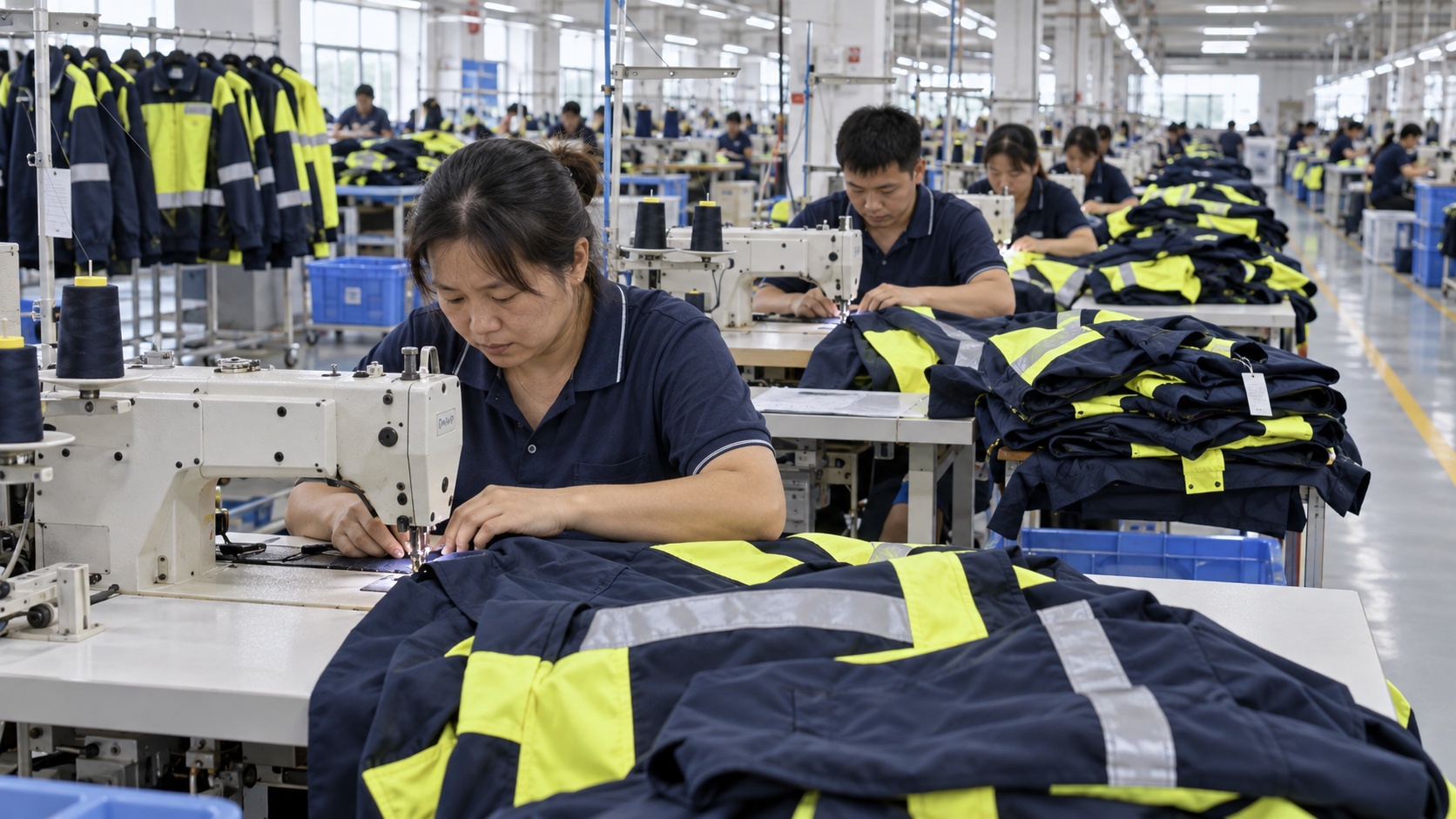
High-visibility workwear should be selected from the work situation and destination-market requirements, not from colour alone. This guide helps procurement teams write a clearer hi-vis brief, ask for appropriate documentation and avoid treating a fluorescent garment as automatically suitable for every exposure condition.
1. Begin with a risk assessment and the actual work scene
High-visibility garments are used to improve a wearer’s conspicuity where vehicles, mobile equipment, low light or complex backgrounds create a risk of not being seen. The right garment depends on factors such as traffic speed, distance from moving equipment, daylight or night work, weather, visual clutter and the task that competes for the worker’s attention.
A road maintenance team, a logistics-yard operator and a warehouse pedestrian may each need a different solution. Consider where the wearer is viewed from, whether the body is partly obscured by equipment or harnesses, and whether the job involves bending, sitting or carrying items across the torso. A vest can be suitable for one controlled situation and insufficient for another.
The employer or project safety authority should determine the required protection for the local situation. A manufacturer can help describe garment construction and documentation, but it should not replace a competent risk assessment. This distinction is important when cross-border teams use the same uniform programme in markets with different regulatory and contractual expectations.
2. Understand the standards before using them in a specification
For European and many international contexts, ISO 20471:2013 addresses high-visibility clothing intended for high-risk situations and includes requirements related to colour, retroreflection, minimum areas and placement of materials. ISO notes that its current published edition is under revision, so buyers should confirm the requirement applicable to the project, market and tender at the time of purchase.
In the United States, ANSI/ISEA 107-2020 is listed by the International Safety Equipment Association as the American National Standard for high-visibility safety apparel. The standard selected for a project is not interchangeable simply because garments may look similar. The buyer should state the required market standard, version where relevant, intended class or type specified by the project, and the documentation expected from the supplier.
Standards do not guarantee safety in every situation. Visibility also depends on dirt, care, storage, damage, ambient light, background and the observer’s ability to recognise the wearer. A good specification combines the relevant standard and label requirements with practical user instructions, replacement planning and an appropriate workplace safety system.
Documentation note: request evidence that relates to the proposed garment and required market claim. Do not assume a certificate for one design, material or size range automatically covers another.
3. Specify the complete garment, not just the fluorescent colour
Hi-vis performance is affected by the background material, retroreflective material, their area and their placement on the finished garment. A buyer brief should identify whether the garment is a vest, jacket, trouser, coverall or layered combination; the required colourway; the position of contrast panels; sleeve or leg configuration; and the locations of pockets, logos and closures.
Branding deserves early attention. A large chest print, dark contrast panel or pocket can change visible areas and the look of the garment. Any proposed logo location should be checked against the garment layout and the applicable requirement before artwork is finalised. It is safer to reserve a logo area in the pattern discussion than to add it after a compliant design has been approved.
Fit and sizing are operational details, not cosmetic extras. Oversized garments can shift tape placement; undersized garments can restrict movement or leave parts of the design distorted. Include the wearer profile, layering allowance and relevant size range in the sample review. Have users perform the movements that occur on site, especially reaching, bending and vehicle entry.
Need a clearer specification?
Turn your requirements into a practical workwear brief.
4. Check materials, trims and care as one system
The fluorescent background fabric and retroreflective tape need to be considered with every other component in the garment. Zippers, bindings, seams, knit cuffs, contrast fabrics and logo applications can affect comfort, durability and visual layout. Ask the supplier which materials are proposed and how their performance is controlled for the intended garment.
Care can materially affect a hi-vis programme. Exposure to dirt, sunlight, washing chemistry, drying and repair can change the appearance and function of garment components over time. Confirm the recommended care route, who is responsible for maintaining the garment and when a damaged or heavily soiled garment should be removed from service. The relevant standard documentation should not be used as a substitute for sensible inspection by the user.
Factory testing and sample review should focus on the complete order. Check colour consistency, tape placement, seam quality, label information, branding location and garment measurements against the approved specification. If care performance or a particular test requirement is part of the project, agree the applicable test evidence before bulk release rather than after shipment inspection.
5. Build a procurement brief that can be quoted accurately
A practical high-visibility workwear brief records the end use, project location, required market standard, garment category, colours, size range, branding, quantity, care route, packaging and delivery date. Attach tender clauses or project safety requirements where they exist. This lets a supplier identify conflicts, document gaps and material choices before developing a sample.
Decide what evidence is needed at each stage. Before sampling, the buyer may need a material proposal and a discussion about design. Before bulk production, the buyer needs an approved sample and an agreed specification. Before shipment, the buyer may need inspection records, packing data and the project-specific documents already agreed. Do not add an unplanned compliance demand after bulk material has been cut.
For global supply, confirm the importer, destination, labelling language, shipping marks and who will retain the documentation. If teams in different countries use the garments, check whether one common design can meet all required conditions or whether separate configurations are needed.
6. Use sample approval and shipment inspection to protect the programme
The approved sample should be a reference for visual construction and practical use. Compare the bulk garment to it during in-line and final inspection: fluorescent and contrast colours, retroreflective layout, logo size and location, closure function, seams, measurements and labels. Record any project-specific checks in the inspection plan.
Shipment inspection is most effective when the buyer and factory agree the criteria before production. A third-party inspector or customer representative can only assess what has been specified. If cartons must be sorted by size, site or employee group, make that requirement part of the packing list and carton-mark approval.
GarbPact can support a custom hi-vis workwear discussion with product application, sample planning and pre-shipment checks against the approved order specification. We do not substitute our judgement for the employer’s legal or safety responsibilities; the right starting point remains the project risk assessment and applicable market requirement.
Frequently asked questions
Is a fluorescent yellow jacket automatically compliant high-visibility workwear?
No. A bright colour alone does not establish a claim. The relevant standard, finished-garment design, materials, marking and supporting evidence must match the project and market requirement.
Can a company logo be added to high-visibility workwear?
Often yes, but the location and size should be reviewed against the design and the applicable requirement before artwork approval. Do not assume a logo placement is neutral to the garment layout.
What should buyers request from a hi-vis supplier?
Share the risk context and destination market, then request the proposed garment specification, sample process, agreed documentation, care information, inspection criteria and packing plan.
Conclusion
High-visibility workwear is a visibility system built around real work conditions. Start with the risk assessment, name the required market standard, review the whole garment design and approve the evidence and sample before bulk production. This makes the order safer to specify and easier to inspect.
Send your project location, work conditions, garment type, quantities and applicable safety requirements. GarbPact will help structure a practical custom hi-vis workwear brief.